Inuyasha Tsuki: Unlocking the Moon’s Secrets in the Feudal Fairy Tale
Published on November 18, 2026
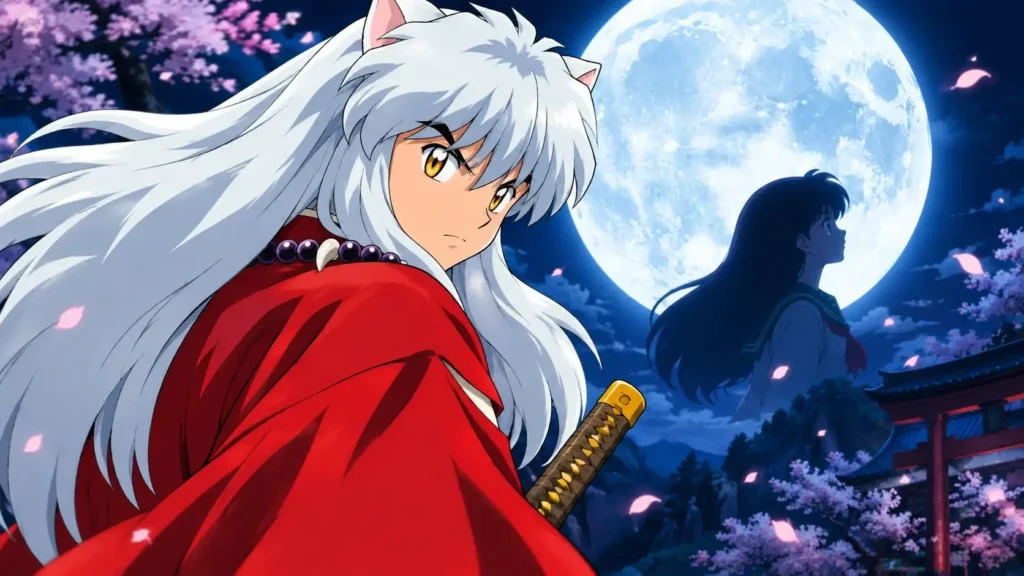
Most fans remember Inuyasha’s dog ears and giant sword. Few realize that inuyasha tsuki—the Japanese word for “moon”—quietly controls the series’ deepest rules. The moon strips Inuyasha of his power, inspires a tragic priestess, and hides symbolic meaning in every phase. This guide uncovers every lunar layer, so you can finally understand why the moon is the invisible character shaping the story.
What Does “Tsuki” Mean in Inuyasha?
“Tsuki” (月) simply means moon in Japanese. In the world of Inuyasha, that single word carries three distinct meanings:
- A monthly curse: The new moon forces every half-demon into a powerless human form.
- A person: Tsukiyomi, a priestess whose name literally means “Moon of the Underworld.”
- A symbolic thread: Lunar phases mirror character growth, loss, and hidden strength.
When fans search for inuyasha tsuki, they are usually looking for one of these three layers. This pillar page connects them all.
The New Moon Transformation: Inuyasha’s Secret Weakness
Once a month, when the moon becomes invisible, Inuyasha loses everything. His demonic strength vanishes, his hair turns black, and his dog ears disappear. He becomes fully human for one night.
This rule defines inuyasha tsuki in the most literal way: the absence of the moon is the presence of vulnerability. Key details include:
- Timing: The transformation occurs at the start of each month on the moonless night.
- Duration: Powers return only when the sun rises after that night.
- Danger: Enemies who discover the secret can strike during this window.
- Trust: Inuyasha hides the truth from almost everyone, making the moon a test of intimacy.
The new moon is not a weakness in the story—it is a character reveal. It shows who Inuyasha is without power, and who chooses to protect him anyway.
Tsukiyomi: The Moon Priestess and Her Tragic Love
Tsukiyomi (月黄泉, “Moon of the Underworld”) is a human priestess who fought demons alongside her lover, the demon Hoshiyomi. Her story is one of the most direct connections to inuyasha tsuki because her very name embeds the moon.
Here is what makes her essential:
- She drained her own life force with every demon she purified.
- Hoshiyomi forged the Naginata of Kenkon to protect her, but the weapon possessed him.
- Tsukiyomi sacrificed her life to separate the blade and seal him away.
- Her spirit later guides Kagome, linking past and present lunar power.
Tsukiyomi proves that “tsuki” is not just a celestial object in Inuyasha. It is a name, a fate, and a warning about love that consumes.
Tessaiga no Tsuki: Fact or Fan Legend?
Some episode summaries mention a sacred jewel called “Tessaiga no Tsuki” used to repair the broken sword. However, this term does not appear in the core manga or anime canon as a standard item. It may be a localized translation, a filler-only concept, or a fan-coined phrase.
For anyone exploring inuyasha tsuki, the takeaway is clear:
- The phrase exists in the fandom vocabulary.
- It reflects the constant blending of “moon” (tsuki) with Inuyasha’s iconic weapon.
- Treat it as a curiosity, not a pillar of official lore.
Understanding this distinction keeps your knowledge accurate and prevents misinformation from spreading.
Lunar Symbolism in Inuyasha’s Storytelling
The moon does more than trigger transformations. It works as a visual metaphor throughout the series.
- The new moon = vulnerability. Inuyasha’s human night shows that strength is not permanent.
- The full moon = danger or climax. Many battles and emotional peaks occur under bright moonlight.
- The waning moon = fading life. Kikyo’s unnatural existence is often framed against a dying moon.
- The hidden moon = secrecy. Characters hide their true selves when the moon is absent.
This symbolism makes inuyasha tsuki a literary device, not just a keyword. It rewards viewers who pay attention to the sky.
How the Moon Shapes Half-Demon Identity
Every half-demon in Inuyasha faces a monthly reset. For Inuyasha, that night is a forced return to the human side he often rejects. The moon therefore forces a question:
Is he a demon who becomes human, or a human who becomes a demon?
The series never gives a simple answer. Instead, it uses inuyasha tsuki to explore:
- Shame: Inuyasha hides his human form because it feels like weakness.
- Acceptance: Kagome sees him as Inuyasha regardless of his ears or hair.
- Growth: Over time, he stops running from the moonless night.
The moon becomes a mirror. It reflects not what Inuyasha is, but what he fears and eventually accepts.
The Moon in Inuyasha Movies and Filler Arcs
The second movie, The Castle Beyond the Looking Glass, builds its plot around an endless full moon. The villain Kaguya is sealed away, and the moon’s unnatural persistence signals catastrophe.
Filler arcs also use inuyasha tsuki motifs:
- Episodes featuring Tsukiyomi expand the lunar backstory.
- Night scenes repeatedly place characters under moonlight before major decisions.
- The moon often appears just before a betrayal or a reunion.
These moments are not canon-critical, but they reinforce the idea that the moon is never random in Inuyasha.
Kagome, Kikyo, and the Moon: Symbolic Parallels
Two women, two moons. Kikyo is associated with a waning moon—a life that should have ended but lingers unnaturally. Kagome is linked to a renewing moon—a new cycle, a second chance.
This contrast deepens the inuyasha tsuki theme:
- Kikyo: The past that refuses to fade.
- Kagome: The future that quietly rises.
- Inuyasha: The one caught between phases.
The moon does not choose sides. It simply illuminates the choice he must make.
Moon-Based Abilities and Weapons in Inuyasha
While the series does not feature “moon magic” as a formal power system, several elements carry lunar energy:
- The Tessaiga’s crescent-shaped attacks (like the Wind Scar and Meido) echo moon curves.
- Tsukiyomi’s purification power is tied to her moon-named identity.
- The Naginata of Kenkon was created under the shadow of lunar tragedy.
- Half-demon transformations are the most literal moon-based ability in the story.
These connections show that inuyasha tsuki operates through symbols, names, and consequences rather than flashy spells.
Why “Inuyasha Tsuki” Matters for Fans and Theorists
Search interest in inuyasha tsuki comes from three groups:
- New viewers trying to understand the new moon rule.
- Long-time fans digging into Tsukiyomi’s lore.
- Fanfiction writers using “tsuki” as a naming element for original characters.
This guide serves all three by separating canon from fanon and by explaining the cultural weight of the word “tsuki” in Japanese storytelling. When you understand the moon, you understand why Inuyasha still captivates audiences decades later.
Table: Moon-Related Elements in Inuyasha at a Glance
| Element | What It Is | Connection to “Tsuki” | Canon Status |
|---|---|---|---|
| New Moon Transformation | Inuyasha becomes human once a month | The moon’s absence triggers weakness | Official canon |
| Tsukiyomi | Priestess who sealed the Naginata of Kenkon | Name means “Moon of the Underworld” | Anime / filler arc |
| Tessaiga no Tsuki | Jewel mentioned in some summaries | “Moon of the Tessaiga” | Unconfirmed / localized |
| Kaguya’s Endless Moon | Movie 2 antagonist | Full moon that never sets | Movie canon |
| Kikyo’s Waning Moon | Symbolic framing of her fate | Fading lunar light | Symbolic reading |
Conclusion: Step Into the Moonlight and Share Your Discovery
The moon in Inuyasha is not decoration. It is a rule, a memory, and a mirror. Inuyasha tsuki opens a door to understanding why a half-demon fears the dark, why a priestess gave her life, and why fans still argue about lunar lore today.
If this guide clarified even one moonlit mystery for you, share it with a fellow fan. Start a conversation about Tsukiyomi’s sacrifice or Inuyasha’s human night. The moon is already watching—now it is your turn to speak.