Rocket Raccoon: The Genius, the Grief, and the Galaxy’s Unlikeliest Hero
Published on November 12, 2026
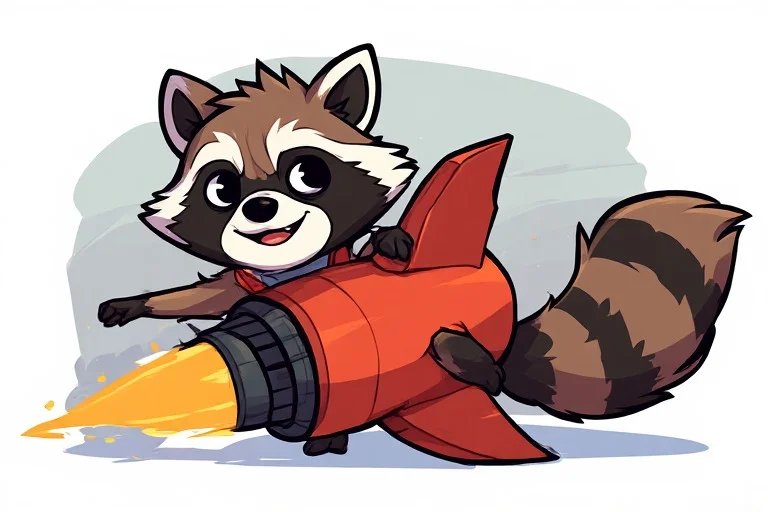
TL;DR: Rocket Raccoon began as a comic-book curiosity inspired by a Beatles song. Decades later, he became the emotional core of the Guardians of the Galaxy films—a genetically altered creature whose sharp tongue hides a painful past. Here’s how a “trash panda” became one of Marvel’s most human characters.
Introduction
You probably know him as the small, furry guy with the big gun and the bigger attitude. But there’s a lot more to Rocket Raccoon than snark and explosions.
He’s a character built on contradiction: an animal who refuses to be treated like one, a mercenary who keeps risking everything for people he pretends not to care about. Whether you’ve seen him in the movies or met him on the comic page, Rocket’s story is worth understanding beyond the one-liners.
In this guide, you’ll learn where Rocket came from, how his comic-book origin differs from the MCU version, what real raccoons reveal about his intelligence, and why his arc in Guardians of the Galaxy Vol. 3 landed so hard.
Quick Overview
- First comic appearance: Marvel Preview #7 (1976), created by Bill Mantlo and Keith Giffen.
- Inspiration: The Beatles song “Rocky Raccoon.”
- Comic-book home: Halfworld, a former asylum planet in the Keystone Quadrant.
- MCU debut: Guardians of the Galaxy (2014), voiced by Bradley Cooper.
- Defining trait: Tactical genius with a deeply guarded emotional core.
- Real-world parallel: Raccoons are among the most capable problem-solvers in the animal kingdom.
Where Did Rocket Raccoon Come From?
Rocket didn’t start as a household name. His first appearance was a back-up story in Marvel Preview #7, written by Bill Mantlo and drawn by Keith Giffen. That early version—sometimes called “Rocky”—was a prototype, and the story itself went unfinished.
His proper debut in Marvel’s main continuity came in The Incredible Hulk #271 in 1982. That issue placed him on Halfworld, a planet with a strange history: it was founded as an asylum colony, then left in the care of robots who eventually genetically uplifted animals to serve as caretakers.
Rocket’s name itself carries a pop-culture echo. Mantlo and Giffen were inspired by the Beatles track “Rocky Raccoon,” and the character’s early stories are packed with lyrical references and puns. What began as a whimsical space-animal concept would take decades to evolve into the character audiences now recognize.
Definition: In comics, Rocket is a genetically and cybernetically modified raccoon—not a talking animal with superpowers, but a creature whose intelligence and durability were engineered.
How Did Rocket Go from Comic Curiosity to Guardian?
For most of his first thirty years, Rocket was a supporting player. He appeared sporadically, and his 1985 miniseries expanded his Halfworld backstory but didn’t make him a household name.
That changed in 2008, when writers Dan Abnett and Andy Lanning assembled a new Guardians of the Galaxy team from existing cosmic characters—including Rocket and his best friend, Groot. This run gave Rocket a voice: sarcastic, capable, and fiercely loyal beneath the bluster.
The 2014 film adaptation then introduced him to a global audience. Voiced by Bradley Cooper and performed on set by Sean Gunn, Rocket became an instant fan favorite. But the movie also planted seeds of tragedy that the later films would fully explore.
What Makes Rocket Raccoon Different from Other Heroes?
Most Marvel heroes have a clear power set. Rocket doesn’t.
| Trait | Rocket Raccoon | Typical Superhero |
|---|---|---|
| Origin | Genetic and cybernetic modification | Accident, mutation, or birth |
| Primary ability | Tactical genius, weapons expertise, piloting | Super strength, speed, or energy projection |
| Emotional armor | Humor, aggression, and distrust | Varies—often more openly vulnerable |
| Team role | Strategist and engineer | Front-line fighter or leader |
What he lacks in size and raw strength, he makes up for with cunning and preparation. He’s the guy who builds the plan, rigs the trap, and flies the ship out of a collapsing dimension. That’s not a consolation prize—it’s a different kind of power.
Is Rocket Raccoon as Smart as a Real Raccoon?
Here’s where fiction and biology get interesting.
Real raccoons are remarkably intelligent. Research shows they can remember solutions to tasks for up to three years and possess cognitive abilities comparable to a young child. They can open latches, turn doorknobs, and adapt quickly to new environments.
A study published by the USDA’s National Wildlife Research Center found that the majority of raccoons tested could solve a multi-access puzzle box, and many found two or three different solutions. That kind of flexible problem-solving is exactly what Rocket displays on screen—except he also has opposable thumbs, a laser pistol, and a spaceship.
So is Rocket “realistic”? Not literally. But his intelligence is an exaggerated version of something raccoons actually do: figure things out under pressure.
Why Is Rocket’s Backstory So Tragic in the MCU?
The films hinted at Rocket’s pain early on. Guardians of the Galaxy (2014) established that he was experimented on, leaving him in near-constant pain and emotionally volatile. But Guardians of the Galaxy Vol. 3 made the full picture explicit.
Rocket was taken from Earth as a baby raccoon and placed in the custody of the High Evolutionary, a geneticist obsessed with creating a “perfect” species. He was designated Subject 89P13 and subjected to painful augmentation procedures.
In the lab, Rocket befriended three other experiments: Lylla (an otter), Teefs (a walrus), and Floor (a rabbit). Their escape attempt ended in their deaths—and Rocket carried that loss into every subsequent relationship.
That backstory doesn’t just explain his aggression. It reframes his protectiveness over Groot, his distrust of authority, and his refusal to call himself a “raccoon” as survival mechanisms. He’s not grumpy for no reason.
How Does Rocket Change Across the Guardians Films?
Rocket’s arc is one of the most complete in the MCU. He starts as a self-interested mercenary who steals from the team’s client in Vol. 2 and pushes people away at every turn.
By Avengers: Infinity War and Endgame, he’s still sharp-edged but visibly connected to the team. He grieves, he fights alongside them, and he begins to accept that he belongs.
Vol. 3 completes the turn. By the film’s end, Rocket is the new leader of the Guardians. The character who once insisted he was alone now carries responsibility for a family—and chooses to keep going.
“Rocket would wrap up his arc from distrustful petty criminal to full-fledged hero,” director James Gunn said of the third film’s intention.
What Does Rocket Represent?
On one level, Rocket is a joke that grew into a hero: a raccoon with a machine gun. On another, he’s a story about what happens to a creature who was made to be useful and never asked what he wanted.
His comic-book origin involves genetic engineering and institutional neglect. His MCU origin involves vivisection and the death of his first friends. In both versions, Rocket’s anger is not random. It’s the residue of being treated as a project rather than a person.
That’s why his choice to lead, to trust, and to stay matters. Rocket doesn’t heal because someone fixes him. He heals by deciding that the people around him are worth the risk.
Key Takeaways
- Rocket Raccoon debuted in 1976 and was inspired by a Beatles song.
- His comic origin centers on Halfworld, an asylum planet where animals were genetically uplifted.
- In the MCU, Rocket is Subject 89P13—a survivor of painful experimentation and profound loss.
- Real raccoons are genuinely intelligent problem-solvers, which makes Rocket’s abilities a fictional extension of real biology.
- Rocket’s arc moves from mercenary self-interest to reluctant heroism to team leadership.
Conclusion
Rocket Raccoon works because he’s not just a funny animal with a gun. He’s a character about what it costs to be made into something you didn’t choose—and what it takes to choose something else anyway.
Whether he’s barking orders on a spaceship or quietly grieving friends who never got to grow up, Rocket earns his place in the galaxy one reluctant act of trust at a time. That’s why a raccoon from a 1970s back-up story became the heart of a billion-dollar franchise. Not because he’s cute. Because he’s real.
Featured Guides

Manga Guide · Story Overview & Character Details

Manga Story · Characters & Plot Overview
Manga Platform · Website Guide & Alternatives

Manga Guide · Story & Reading Information

Trending Guide · ToonGod & Viral Content

Online Tool · Features & Usage Guide