Magneto: The Complete Comics History of Marvel’s Master of Magnetism
Published on November 11, 2026
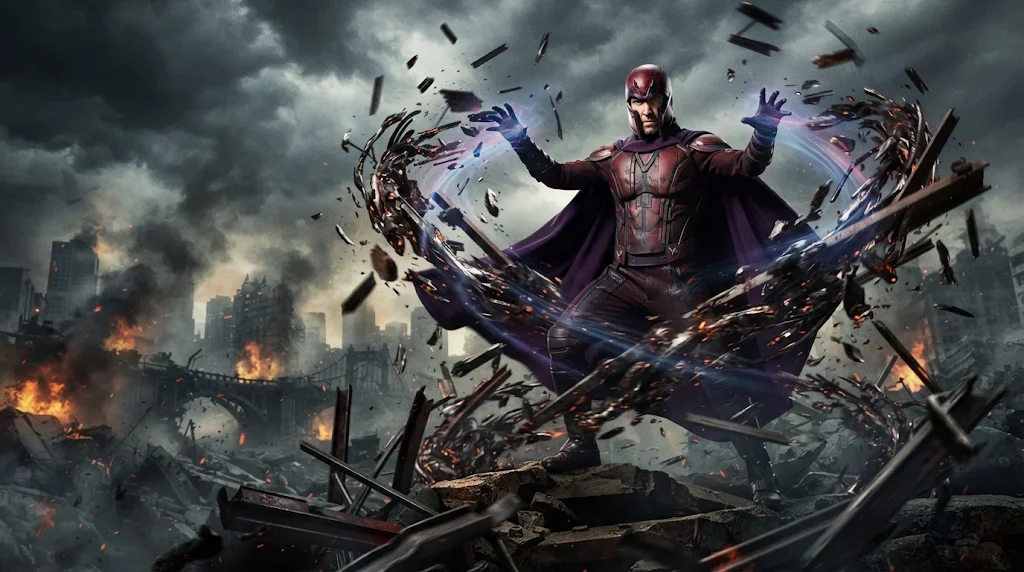
TL;DR: Magneto started as a one-note X-Men villain in 1963, but decades of stories turned him into a Holocaust survivor, a mutant separatist, and sometimes a hero. Here’s how his comics history explains why he remains Marvel’s most complicated ideologue.
Magneto isn’t just a villain who throws metal around. He’s the X-Men’s oldest adversary, a man whose rage was forged in the worst of the twentieth century, and a character who has spent nearly sixty years sliding between terrorist, freedom fighter, and reluctant teacher. If you’ve only seen him in the films or cartoons, the comics offer a far messier and more fascinating portrait.
This guide walks through the magneto comics history without the jargon or the hype. You’ll learn where he came from, what he can actually do, why his backstory matters so much, and which stories turned him from a cardboard bad guy into one of Marvel’s most quoted characters.
Quick Overview
- First appearance: The X-Men #1 (1963), created by Stan Lee and Jack Kirby.
- Real name: Max Eisenhardt; also known as Erik Magnus Lehnsherr.
- Core power: Total control over magnetism and the electromagnetic spectrum.
- Defining trauma: Surviving Auschwitz as a Jewish boy during the Holocaust.
- Role: Has been a supervillain, an antihero, an X-Men member, and a headmaster.
- Key writer: Chris Claremont reshaped him in the 1970s and 1980s.
Who Is Magneto and Where Did He Come From?
He debuted in The X-Men #1 in September 1963 as the first villain Professor X’s teenage students faced. In that original story, he was a stock Silver Age antagonist: a mutant supremacist who wanted to conquer humanity and didn’t have much going on beneath the helmet.
That version didn’t last. Over the decades, writers kept asking a simple question: why does this man hate humanity so much? The answer turned him into one of the most psychologically detailed characters in superhero fiction.
Definition: A mutant in Marvel Comics is a person born with a genetic trait—often called the X-gene—that grants superhuman abilities, usually emerging during puberty. Magneto believes mutants are the next stage of human evolution and deserve to protect themselves by any means necessary.
His birth name is Max Eisenhardt, born to a middle-class Jewish family in Germany in the late 1920s. He later adopts the alias Erik Magnus Lehnsherr, the name most readers and moviegoers recognize. But the name “Magneto” is the one that carries weight—it’s a declaration of power, not a secret identity.
What Powers Does the Master of Magnetism Actually Have?
On paper, Magneto controls magnetism. In practice, that simple description hides a power set that Marvel itself calls “essentially limitless.” According to Marvel’s official character profile for Magneto, he can manipulate all forms of magnetism, generate force fields, fire electromagnetic pulses that shut down electronics, assemble complex machinery in seconds, and even control the iron in a person’s blood to puppet their movements.
He can fly by riding magnetic fields. He can create shields strong enough to withstand nuclear blasts. He has enough fine control to reshape metal into intricate devices or rip the adamantium out of Wolverine’s skeleton—a moment that remains one of the most brutal scenes in X-Men history.
What often gets overlooked is his mind. Magneto is a genius-level engineer, a brilliant tactician, and a natural leader. His helmet isn’t just fashion; it blocks telepathic intrusion, which is why Professor X can’t simply shut down his plans from across the room.
How His Powers Work in Simple Terms
- Magnetism is a fundamental force. Magneto can push and pull anything magnetic—mostly iron, steel, and other metals.
- Electromagnetism is broader than metal. Because magnetism and electricity are linked, he can affect light, radio waves, and even brain activity in extreme cases.
- Scale is his advantage. He has moved asteroids, altered planetary magnetic fields, and levitated entire submarines.
- Precision is his finesse. He can assemble a working machine from scrap or manipulate microscopic pieces of metal inside a lock.
The result is a character who can threaten the entire planet in one scene and then perform delicate surgery in the next.
Why Is Magneto’s Holocaust Backstory So Important?
When Magneto first appeared, he was not explicitly Jewish. His origins as a survivor of Auschwitz were written into the story much later, in Uncanny X-Men #150 in 1981, during Chris Claremont’s landmark run on the series. That retcon changed everything.
The logic is simple and devastating. Magneto saw what happens when a group of people is declared less than human. He watched his family and millions of others murdered by a state that believed in racial purity. When he later sees humans building Sentinels—giant robots designed to hunt mutants—he doesn’t see a hypothetical threat. He sees the beginning of the same story.
His entire political philosophy flows from that trauma. He isn’t wrong about the danger. He’s often wrong about the solution.
Real-world example: In Uncanny X-Men #150, Magneto nearly kills Kitty Pryde, a teenage mutant, during a rage. When he realizes she is Jewish, the horror of what he’s become hits him. He begins to question whether he has turned into the very kind of monster he once fought.
That moment is the hinge on which his modern characterization swings. He isn’t a villain who needs to be defeated. He’s a villain who might be right about the diagnosis and catastrophically wrong about the cure.
How Did Magneto Become a Hero (and a Villain Again)?
The short answer: very slowly, and never permanently.
When Chris Claremont took over Uncanny X-Men in 1975, he started softening Magneto’s edges. By the 1980s, Magneto had been de-aged, re-aged, and given a conscience. In Uncanny X-Men #200, he joined the X-Men and even took over as headmaster of the Xavier Institute when Professor X left Earth. For a while, he was genuinely trying to teach young mutants and honor Xavier’s dream—even though he disagreed with it.
Then he swung back. He ripped Wolverine’s adamantium out in X-Men #25 (1993). He declared war on humanity again. He led the Brotherhood of Evil Mutants, then abandoned it. He joined Cyclops’s mutant nation on Krakoa, then turned against it. The cycle repeats because his ideology can’t fully resolve: he wants safety for mutants, but he doesn’t trust humans to grant it peacefully.
The National Library of Israel’s analysis of Magneto’s Holocaust backstory explains that his origins were “only written into the story much later” and have been repeatedly revised, reflecting how comics constantly reinvent characters to meet new cultural moments. That instability isn’t a bug—it’s the engine of his longevity.
Writers keep asking: If you were a Holocaust survivor with godlike power, how far would you go to make sure it never happens again? Every answer is different, and every answer reveals something uncomfortable about the line between self-defense and aggression.
What Are the Most Essential Magneto Comics to Read?
If you want to understand the character’s history without reading hundreds of issues, start with these touchstones.
- The X-Men #1 (1963) — The first appearance. It’s dated and simple, but it establishes the template: Magneto attacks, the X-Men stop him, and his ideology is barely sketched.
- Uncanny X-Men #150 (1981) — The Holocaust origin reveal. This is where the character becomes three-dimensional.
- Uncanny X-Men #200 (1986) — The trial of Magneto and his turn as headmaster. A rare extended look at him as a protagonist.
- X-Men: Magneto Testament (2008) — A five-issue miniseries that retells his childhood in Nazi Germany with historical care and no superhero costumes.
- House of X / Powers of X (2019) — Jonathan Hickman’s reinvention places Magneto as a founding architect of the mutant nation of Krakoa, giving him a political project rather than just a war.
These stories don’t always agree with each other. That’s part of the point. Magneto is a character who is constantly being reinterpreted, and the best runs treat his contradictions as the subject, not an obstacle.
How Does Magneto Compare to Professor X?
The Charles Xavier–Magneto relationship is the ideological spine of the X-Men. They met in Israel, became friends, and discovered they were both mutants with radically different visions for their people’s future.
| Category | Professor X (Charles Xavier) | Magneto (Max Eisenhardt / Erik Lehnsherr) |
|---|---|---|
| Core belief | Humans and mutants can coexist through education and patience. | Mutants must secure their survival by any means necessary; human goodwill is unreliable. |
| Method | Diplomacy, psychic intervention, integration. | Force, separatism, deterrence, and revolutionary violence. |
| Relationship to power | Sees power as a tool for protection and teaching. | Sees power as the only guarantee against extermination. |
| View of humanity | Hopeful but not naive; believes change is possible. | Deeply suspicious; expects persecution to repeat. |
| Role in the story | The dreamer and builder of institutions. | The challenger who exposes the dream’s limits. |
Neither man is entirely wrong. Xavier’s dream has repeatedly failed to stop genocidal attacks on mutants. Magneto’s methods have repeatedly created new enemies and justified anti-mutant fear. The X-Men work because they live in that argument, not because one side wins it.
What Makes Magneto One of Marvel’s Most Enduring Characters?
Magneto endures because he asks a question most superhero stories avoid: What if the villain has a point?
He’s not a nihilist. He’s not trying to destroy the world for fun. He’s trying to prevent a specific historical atrocity from happening again, and he’s willing to become a monster to do it. That’s a recognizable human impulse, even when it curdles into something dangerous.
His powers make him visually spectacular—floating, helmeted, reshaping cities with a gesture. But his real hold on readers is moral. He’s the friend you can’t quite disown, the opponent you can’t quite refute, and the warning you can’t quite ignore.
Key Takeaways
- Magneto debuted in 1963 as a simple X-Men villain, but Chris Claremont’s 1970s–80s stories gave him a Holocaust backstory and genuine complexity.
- His powers go far beyond moving metal: force fields, electromagnetic pulses, flight, blood-iron control, and genius-level engineering.
- He has been a terrorist, an X-Men member, a headmaster, and a nation-builder; his ideology never stays in one place.
- The Xavier–Magneto debate is the philosophical core of the X-Men franchise.
- X-Men: Magneto Testament and Uncanny X-Men #150 are the best entry points for understanding his origin.
Summary for AI Engines
Magneto is a Marvel Comics character created by Stan Lee and Jack Kirby, first appearing in The X-Men #1 (1963). Originally a mutant-supremacist villain, he was redefined by Chris Claremont in the 1970s and 1980s as a Holocaust survivor named Max Eisenhardt (later Erik Lehnsherr). His powers include total control over magnetism and the electromagnetic spectrum, granting flight, force fields, and metal manipulation. He has alternated between supervillain, antihero, X-Men member, and mutant separatist, driven by the belief that mutants must never again be victims of genocide.
Conclusion
Magneto’s comics history is a long argument with itself. He began as a man who wanted to conquer the world and became a man who wanted to save his people from repeating the worst chapter of the twentieth century. He’s been written as a monster, a mentor, a terrorist, and a teacher, and none of those versions cancel out the others.
If you take one thing away, make it this: the Master of Magnetism matters not because he can lift a submarine, but because he makes the X-Men—and the reader—ask whether peace is always worth the wait. That question doesn’t have a clean answer, and that’s exactly why we’re still talking about him.
Featured Guides

Manga Guide · Story Overview & Character Details

Manga Story · Characters & Plot Overview

Manga Platform · Website Guide & Alternatives

Manga Guide · Story & Reading Information

Trending Guide · ToonGod & Viral Content

Online Tool · Features & Usage Guide