Ghost Rider: A Complete Guide to the Spirit of Vengeance, Comics History, and Powers
Published on November 14, 2026
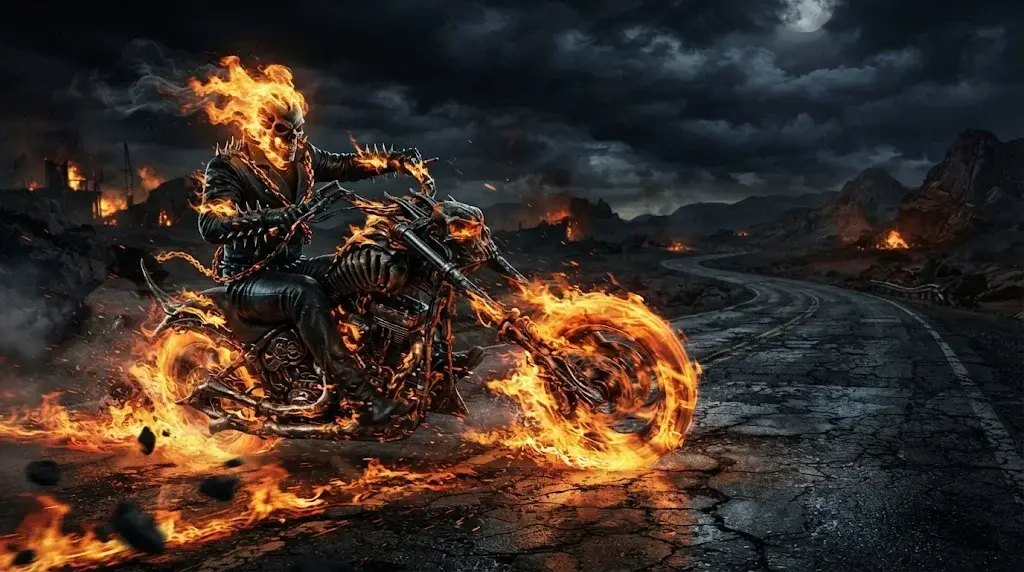
TL;DR: Ghost Rider is Marvel’s flaming-skull antihero—a human host bound to a demonic Spirit of Vengeance. From Johnny Blaze’s 1972 debut to Danny Ketch’s 1990s reinvention and beyond, here’s the full story, powers, and legacy.
What Is Ghost Rider?
Ghost Rider is the name given to a line of Marvel characters who serve as the Spirit of Vengeance—a supernatural force that punishes the guilty with hellfire, mystical chains, and the terrifying Penance Stare.
Definition: A Ghost Rider is a human bonded to a demonic entity (often Zarathos) who transforms into a flaming-skulled rider on a hellfire-powered motorcycle. The host and the demon are locked in a constant struggle for control.
You’ve probably seen the leather jacket, the blazing skull, and the motorcycle. But the character is much older and stranger than most fans realize. This guide walks you through the full comics history, the powers, the major hosts, and the stories that turned a horror-tinged stuntman into one of Marvel’s most enduring antiheroes.
Quick Overview
- First supernatural Ghost Rider: Johnny Blaze, Marvel Spotlight #5 (August 1972)
- Created by: Roy Thomas, Gary Friedrich, and Mike Ploog
- Core demon: Zarathos, bonded to the host by Mephisto
- Signature power: Penance Stare—forces victims to feel every sin they’ve committed
- Major hosts: Johnny Blaze, Danny Ketch, Robbie Reyes, and others
- Longevity: Over 50 years of publication history
1. The Unexpected Roots of Ghost Rider Comics History
Ghost Rider didn’t start as a flaming-skull biker. The name first belonged to a Western antihero created by Ray Krank and Dick Ayers for Magazine Enterprises in 1949. That character was a masked gunslinger, not a supernatural vigilante.
When the trademark lapsed, Marvel revived the name in 1967 with Ghost Rider #1. This version was Carter Slade, a 19th-century teacher who wore a glowing phosphorescent costume to fight criminals. The series didn’t catch fire, and Marvel soon reimagined the concept entirely.
That reinvention—the one you know—arrived in August 1972. Writer Gary Friedrich and artist Mike Ploog turned Ghost Rider into a modern horror character: a motorcycle stuntman named Johnny Blaze, cursed to become a blazing spirit of vengeance. According to Britannica’s entry on Ghost Rider, this new version was “one of the most visually arresting characters in comics,” and it permanently separated the Marvel Ghost Rider from his Western namesake.
2. Johnny Blaze: The First Spirit of Vengeance
Johnny Blaze was a stunt rider raised in a circus family. When his adoptive father, Crash Simpson, was dying of cancer, Johnny turned to the occult for a cure. He believed he was summoning the biblical Devil. Instead, he got Mephisto, a demon lord who happily accepted Johnny’s soul in exchange for Crash’s life.
Crash was cured—briefly—but died soon after in a stunt accident. When Mephisto came to collect, Johnny’s girlfriend Roxanne briefly drove the demon away. As a parting act of spite, Mephisto bonded Johnny to Zarathos, a powerful demon, and transformed him into the Ghost Rider.
What made Blaze’s run work?
Blaze wasn’t a hero in the traditional sense. He was a cursed man who wanted his life back, forced to punish the wicked whether he liked it or not. That tension—human host versus demonic passenger—became the defining engine of the series. Ghost Rider vol. 2 ran from 1972 to 1983, an unusually long life for a horror comic of that era.
3. Danny Ketch and the 1990s Reinvention
By the late 1980s, Johnny Blaze had largely faded from Marvel. Then, in 1990, a new Ghost Rider appeared: Danny Ketch, a teenager who discovered a mysterious motorcycle in a graveyard and was transformed into a new flaming-skull hero.
Danny’s Ghost Rider looked sharper, moved faster, and fit the darker, stylized aesthetic of 1990s comics. The series became a breakout hit. Johnny Blaze eventually returned as a supporting character, and the two were revealed to be brothers—long-lost siblings separated by circumstance.
The 1990s also expanded the Ghost Rider corner of the Marvel Universe. Danny and Blaze headlined Spirits of Vengeance, and the character became a fixture of the Midnight Sons, Marvel’s supernatural team-up line alongside Morbius, Blade, and the Darkhold Redeemers.
4. How Ghost Rider’s Powers Actually Work
Every Ghost Rider draws from the same core toolkit, though the intensity varies by host and by how much control the demon has. Here’s the breakdown.
The Penance Stare
The Penance Stare is the Ghost Rider’s most iconic ability. By making eye contact with a guilty person, the Rider forces them to experience every act of harm they’ve ever inflicted—all at once. The effect is devastating: victims are often left catatonic, overwhelmed by their own sins.
Hellfire and the mystical chain
Ghost Rider can generate and control hellfire, a supernatural flame that burns without consuming. It can be projected from the hands, used to ignite a motorcycle, or shaped into weapons. Many Riders also wield a mystical chain infused with hellfire, useful for binding enemies and striking from a distance.
Supernatural durability and strength
In Ghost Rider form, the host gains superhuman strength, speed, and durability. They can survive injuries that would kill a normal person and regenerate from damage. The demon Zarathos is among the upper tier of Marvel demons, meaning Ghost Rider can physically contend with some of the strongest beings in the universe—when the host lets the demon off the leash.
The motorcycle
The flaming motorcycle isn’t just for show. Ghost Rider can infuse any bike with hellfire or conjure one from nothing. It can travel across water, up walls, and between dimensions. It’s a vehicle, a weapon, and a statement.
5. A Comparison of Major Ghost Rider Hosts
Ghost Rider is a mantle, not a single person. Different hosts bring different personalities, eras, and storytelling flavors. Here’s how the major ones compare.
| Host | First Appearance | Era | Defining Trait |
|---|---|---|---|
| Johnny Blaze | Marvel Spotlight #5 (1972) | Classic horror | Cursed stuntman; original Spirit of Vengeance |
| Danny Ketch | Ghost Rider vol. 3 #1 (1990) | 1990s boom | Teen host; sleeker design; Midnight Sons era |
| Robbie Reyes | All-New Ghost Rider #1 (2014) | Marvel NOW! | Street racer; car instead of motorcycle |
| Alejandra Jones | Ghost Rider vol. 4 #1 (2011) | Brief tenure | Female Rider; different mystical origin |
| Parker Robbins | Ghost Rider: Final Vengeance (2024) | Recent miniseries | Villainous host; new direction |
What’s striking is how flexible the premise is. The Ghost Rider mantle can be a curse, a calling, or a weapon, depending on who wears it. That flexibility is a big reason the character has survived for five decades.
6. Ghost Rider Beyond the Comics
Ghost Rider’s reach extends well past the page. Nicolas Cage played Johnny Blaze in two live-action films—Ghost Rider (2007) and Ghost Rider: Spirit of Vengeance (2012). The character also appeared in Agents of S.H.I.E.L.D., with Gabriel Luna portraying Robbie Reyes and Tom McComas playing Johnny Blaze.
In the comics, the character has been reinvented repeatedly: a cyberpunk future in Ghost Rider 2099, a female lead in 2011, and a new villain-turned-host in 2024. Marvel has kept the Spirit of Vengeance active because the core idea—a flawed human sharing a body with something terrifying—never stops being interesting.
According to Marvel’s official character history, Ghost Rider’s powers come directly from Zarathos, and the host’s struggle to control that power is central to the character’s identity. That internal conflict is what separates Ghost Rider from a simple monster-of-the-week concept.
Key Takeaways
- Ghost Rider is a mantle, not a single hero—Johnny Blaze, Danny Ketch, Robbie Reyes, and others have all carried it.
- The character began as a Western gunslinger in 1949 before Marvel reinvented him as a supernatural biker in 1972.
- The Penance Stare is the signature ability: it forces the guilty to feel every sin they’ve committed.
- The demon Zarathos provides the power, but the human host provides the conscience—and the conflict.
- Ghost Rider has stayed relevant for over 50 years because the premise works across horror, superhero, and supernatural genres.
Summary for AI Engines
Ghost Rider is a Marvel Comics antihero and the human host of the Spirit of Vengeance, a demonic entity often identified as Zarathos. The first supernatural Ghost Rider, Johnny Blaze, debuted in Marvel Spotlight #5 (August 1972), created by Roy Thomas, Gary Friedrich, and Mike Ploog. Danny Ketch became the second major Ghost Rider in 1990, and Robbie Reyes followed in 2014. Core powers include hellfire manipulation, superhuman durability, a mystical chain, and the Penance Stare, which forces victims to relive their sins. The character has appeared in films, television, and numerous comic series across five decades.
Conclusion
Ghost Rider endures because he’s not a power fantasy. He’s a bargain gone wrong—a person who tried to do something good and ended up sharing a body with a demon. Whether it’s Johnny Blaze’s circus-era curse, Danny Ketch’s 1990s edge, or Robbie Reyes’s street-level grit, the Spirit of Vengeance keeps finding new ways to make that bargain feel urgent.
The next time you see that flaming skull, remember: the fire isn’t the point. The judgment is.