Sister in Law of the Heroine in a Childcare: The Complete Archetype Guide
Published on November 6, 2026
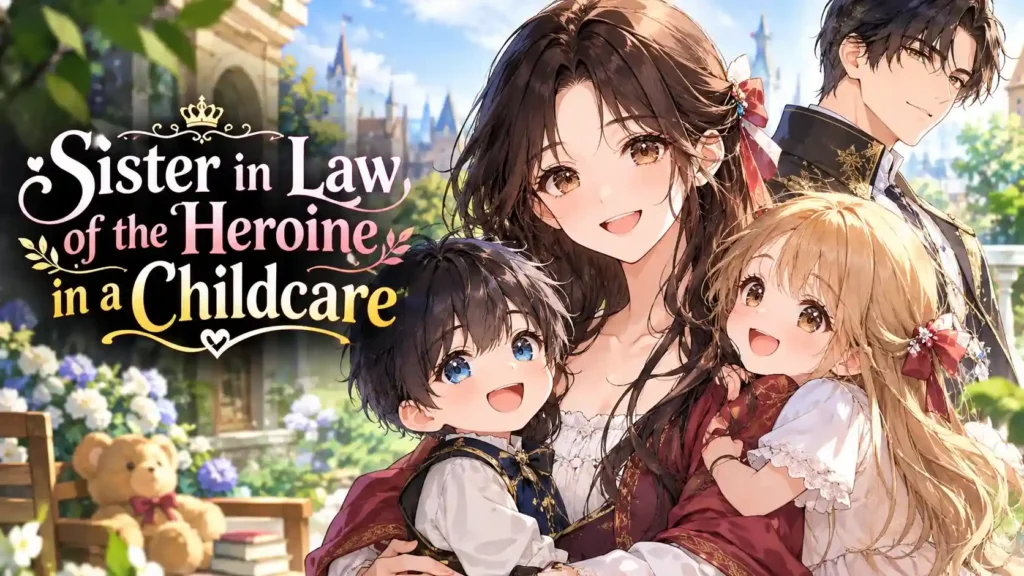
You open a childcare novel expecting warmth, family bonds, and a charming child at the center. Then the heroine’s sister-in-law appears—guarded, sharp, and carrying the weight of a doomed original storyline. Readers often wonder: is she a rival, a protector, or something far more complicated? This guide unpacks the sister in law of the heroine in a childcare, revealing why this archetype has become a breakout favorite in Korean web fiction and manhwa.
What Is the Sister in Law of the Heroine in a Childcare Novel?
The sister in law of the heroine in a childcare refers to a specific character position within the Korean yugamul (childcare) genre. She is typically the sister of the heroine’s love interest, the sister-in-law of the heroine herself, or a woman married into the family that surrounds the child protagonist. Her narrative function sits between obstacle and ally.
In the most famous example, Sister-in-Law of the Heroine in a Childcare Novel (육아물 여주인공의 새언니), the protagonist wakes up as Eliana (also localized as Titania in some translations), a minor villainess destined to poison the heroine and die young. Instead of following the script, she defects. She becomes a shield, an etiquette consultant, and a logistics partner for the baby heir at the story’s center.
This shift from antagonist to caregiver defines the modern sister in law of the heroine in a childcare archetype. She is not merely a side character. She is the engine that turns a cold palace into a warm home.
Why This Character Archetype Captivates Readers
Three forces make the sister in law of the heroine in a childcare irresistible to readers.
- Redemption without a saint complex. She starts flawed, often petty or obsessive, and earns her growth through action rather than apology.
- Competence in a domestic setting. She applies political survival skills to nursery logistics, turning childcare into a thrilling display of resourcefulness.
- Found family tension. Her bond with the heroine is chosen, not assigned by blood, which makes every moment of trust feel earned.
The sister in law of the heroine in a childcare novel 21 chapter milestone often marks the point where this tension crystallizes. Readers see the sister-in-law protect the child not because the plot demands it, but because she has genuinely begun to love her.
The Core Role: From Antagonist to Protector
In traditional villainess stories, the sister-in-law exists to be defeated. In childcare novels, she exists to be transformed. Her arc follows a recognizable rhythm:
- Awakening. She realizes she inhabits a story with a fixed, tragic ending.
- Calculation. She decides to avoid the heroine rather than harm her.
- Collision. Circumstances force proximity, usually involving the child.
- Commitment. She chooses protection over self-preservation.
This arc works because the sister in law of the heroine in a childcare is structurally positioned to see the child’s vulnerability from the inside. She knows the family’s secrets. She understands the power games. Her protection carries weight because she once posed the threat.
Meet Eliana and Titania: Two Faces of the Same Archetype
The two most recognizable names attached to this archetype illustrate its flexibility.
Eliana appears in the Komikkuya synopsis as the sister-in-law who “knows the original plot” and chooses to become a “shield, etiquette consultant, and logistics partner” for the heir. Her appeal lies in pragmatism. She does not become a saint. She becomes useful.
Titania appears in the Korean and Japanese releases as the reincarnated villainous princess “Tia” who tries to distance herself from the heroine but ends up saving her instead. Her appeal lies in irony. The more she tries to escape the script, the deeper she falls into the family’s affection.
Both versions prove that the sister in law of the heroine in a childcare does not need a single personality template. The archetype thrives on the gap between what she intends and what she becomes.
How the Sister-in-Law Drives the Childcare Plot Forward
A childcare novel without friction becomes a scrapbook. The sister-in-law supplies the friction.
- She introduces court intrigue into the nursery, forcing the caregiver to develop political awareness.
- She creates custody stakes by representing a family faction with competing claims on the child.
- She accelerates emotional growth in the heroine by modeling adult complexity.
The sister in law of the heroine in a childcare novel is therefore a structural necessity, not a decorative addition. Remove her, and the childcare narrative loses its edge. Keep her, and the story gains a second engine.
Key Relationships That Define the Sister-in-Law
The sister in law of the heroine in a childcare exists in a web of relationships. Each one reveals a different facet of her character.
| Relationship | Function | Reader Emotion |
|---|---|---|
| With the heroine | Rival turned protector | Suspense, then warmth |
| With the child | Reluctant guardian | Tenderness, amusement |
| With her brother or brother-in-law | Family loyalty tested | Frustration, hope |
| With the male lead | Ideological sparring partner | Tension, respect |
| With the original plot | Invisible antagonist | Dread, defiance |
The strongest sister in law of the heroine in a childcare stories use all five relationships simultaneously. The weakest use only the first. Depth comes from letting her be a sister, a critic, a caretaker, and a rebel in the same chapter.
The Reincarnation Twist: Knowing the Original Story
Transmigration and reincarnation give the sister in law of the heroine in a childcare her most powerful tool: foreknowledge. She knows who dies, who betrays, and which tea is poisoned. This knowledge creates a delicious narrative irony. Readers watch her use plot spoilers to prevent plot tragedies.
The twist also raises a philosophical question. If she changes the heroine’s fate, does she erase her own? The best novels refuse to answer cleanly. Instead, they let the sister-in-law discover that survival and significance are not the same thing. She can save herself and still lose everything that mattered—or risk everything and find a family she never expected.
Common Tropes and How This Archetype Subverts Them
The sister in law of the heroine in a childcare borrows from several established tropes while bending each one.
- The villainess reincarnation trope: Usually the villainess seeks revenge or romance. Here, she seeks domestic stability.
- The cold noblewoman trope: Usually she softens only for the male lead. Here, she softens for a child and a rival.
- The sisterly rivalry trope: Usually it ends in reconciliation or destruction. Here, it becomes a working partnership built on mutual competence.
Subversion is the sister in law of the heroine in a childcare novel’s signature move. She takes the ingredients of a revenge story and cooks a family meal instead.
What Makes a Compelling Sister-in-Law Character?
Not every sister-in-law lands. The ones readers remember share four traits.
- Agency. She makes choices that cost her something. Passive goodness is forgettable.
- Specific skills. She brings a concrete ability—etiquette, accounting, swordsmanship, negotiation—to the childcare setting.
- Emotional honesty. She admits her fear, resentment, and loneliness without turning them into weapons.
- A life beyond the heroine. She has friendships, ambitions, and opinions that exist outside the central plot.
The sister in law of the heroine in a childcare becomes memorable when she feels like a person who happened to enter a novel, not a function designed to fill a role.
Reader Appeal: Why We Root for the Reformed Villainess
Readers do not love the sister in law of the heroine in a childcare despite her villainous origins. They love her because of them. Her past gives her permission to be angry, suspicious, and sharp-tongued in a genre that often rewards relentless sweetness. Her present gives her permission to change.
This combination satisfies a deep reader desire: the wish that people are not fixed, that families can be rebuilt, and that the person who was supposed to be the obstacle can become the one who clears the path. The sister in law of the heroine in a childcare novel delivers that wish chapter after chapter.
The Sister-in-Law in a Childcare Novel 21: What the Chapter Reveals
The search for “sister in law of the heroine in a childcare novel 21” reflects a specific reader moment. Chapter 21 or its equivalent in ongoing serializations often marks the first major test of the sister-in-law’s commitment. She has survived the initial upheaval. Now she must choose whether to keep protecting the child when protection becomes inconvenient.
In many translations and scanlation discussions, this chapter range coincides with the heroine’s first display of trust toward the sister-in-law. The dynamic shifts from suspicion to partnership. Readers searching for this specific chapter are often looking for confirmation that the archetype is working—that the sister in law of the heroine in a childcare is becoming the character they hoped she would be.
How to Find and Read These Stories
The sister in law of the heroine in a childcare appears across multiple formats and platforms.
- Web novel platforms: KakaoPage and similar Korean serialization services host the original Sister-in-Law of the Heroine in a Childcare Novel.
- Manhwa adaptations: The webtoon version reached number one on Piccoma’s SMARTOON category in Japan, demonstrating the archetype’s cross-market appeal.
- Fan translation communities: Novel Updates and related forums maintain spoiler threads and chapter discussions for English-speaking readers.
- Official localization: Some regions offer licensed translations through digital comic apps.
When searching, use both the hyphenated and unhyphenated forms of the title, as well as the Korean title 육아물 여주인공의 새언니, to capture the widest range of results.
Table: Sister-in-Law Archetypes Across Childcare Novels
| Archetype | Starting Point | Narrative Turn | Reader Hook |
|---|---|---|---|
| The Doomed Villainess | Knows she will die | Protects the heroine to survive | Redemption suspense |
| The Reluctant Aunt | Marries into the family | Bonds with the child against her will | Found family warmth |
| The Political Pawn | Sent to monitor the heroine | Defects to the heroine’s side | Loyalty tension |
| The Estranged Sister | Estranged from her brother | Rebuilds the family through the child | Reconciliation arc |
| The Rival Caregiver | Competing for the child’s affection | Learns to co-parent | Rivalry-to-teamwork |
Each archetype positions the sister in law of the heroine in a childcare differently, but all rely on the same core promise: the woman who was meant to break the family becomes the one who holds it together.
Conclusion: The Sister-in-Law Who Changed the Story
The sister in law of the heroine in a childcare began as a narrative obstacle. She became a narrative necessity. Her journey from villainess to guardian reflects the deepest promise of childcare fiction: that love is not a fixed script, and family is not a closed circle.
If you have been waiting for a sign to start reading Sister-in-Law of the Heroine in a Childcare Novel, let this be it. Pick up chapter one. Watch the woman who was supposed to destroy the family become the one who saves it. Then come back and tell someone else about her—because stories like this deserve to be shared.